Why Choose a Child Proof Metal Box for Secure Storage?

A small hand can reach farther than many adults expect. That is why secure storage deserves more than a sturdy-looking lid. Safe Kids Worldwide’s 2017 report described tens of thousands of emergency visits involving young children and medication access, underscoring the value of keeping potentially harmful household products secured and out of reach. A Child Proof Metal Box can add a durable barrier, resist everyday knocks, and help keep contents organized in a cabinet or drawer. Still, no container should be treated as completely childproof.

Pediatric injury-prevention expert Dr. Gary Smith, director of the Center for Injury Research and Policy at Nationwide Children’s Hospital, has long emphasized prevention through safer environments. The FDA’s Up and Away campaign captures one practical storage principle: “Keep medicines up and away and out of sight.” A lockable metal box can support that habit, especially when adults close it after every use and store it where children cannot access it.

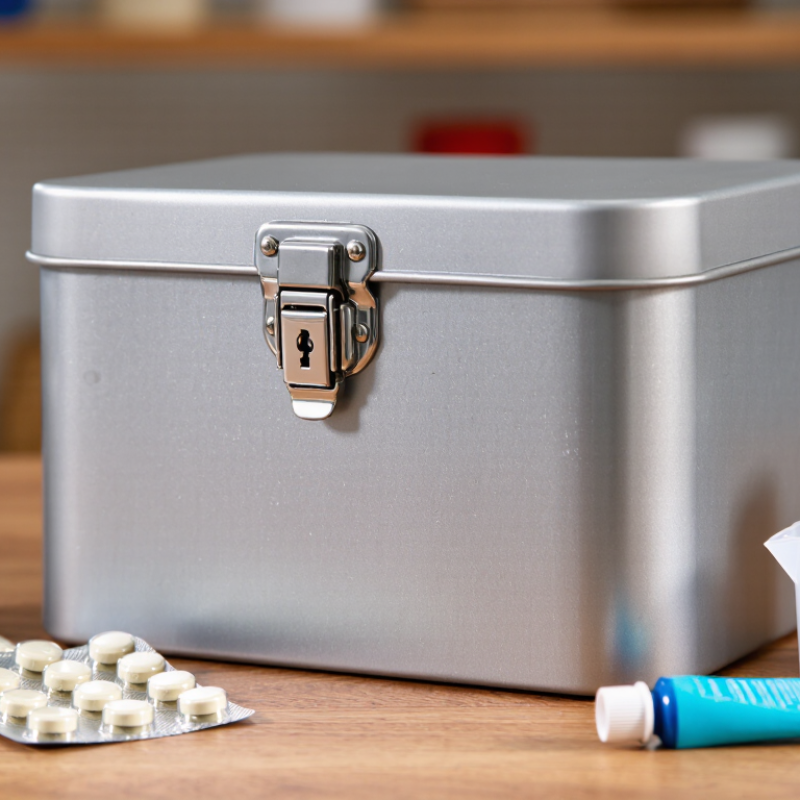
The details matter. Look for a secure latch, smooth edges, and a finish that holds up to repeated handling. Check that adults can operate the lock consistently; a complicated mechanism may be left open in a hurry. That trade-off is easy to overlook. A metal box is a useful layer of protection, not a replacement for original packaging, supervision, or careful storage. Choose one that fits the items you need to secure, then make closing it part of the routine.
Why Choose a Child Proof Metal Box for Secure Storage?

What Defines a Child-Resistant Metal Storage Box?

What Defines a Child-Resistant Metal Storage Box?

A child-resistant metal storage box is designed to make opening difficult for young children while remaining manageable for adults. Look for a clearly described locking mechanism, such as a press-and-turn latch or recessed release, rather than relying on a heavy lid alone. A snug seam, sturdy hinges, and smooth, finished edges also matter. The box should stay closed when bumped, but adults should be able to open it without excessive force. Not childproof.

Claims need careful reading. A metal enclosure is not automatically tested or certified as child-resistant. The U.S. Consumer Product Safety Commission’s special-packaging rules use supervised child and adult panels to assess access and usability. Those tests concern defined packaging protocols, so they should not be assumed to certify every storage box. Ask the maker for test details, and check the latch regularly; worn parts or an unsecured key can weaken protection. The CDC reports that about 60,000 young children visit emergency departments each year after getting into medicines. That figure is a useful reminder: a locked box is one layer, not a replacement for supervision or safe placement. Set it on a stable, high shelf, away from curious hands. Some latches take practice. That trade-off deserves thought.

How Do Its Materials and Locking Features Improve Security?

A child-resistant metal box can add a useful barrier when small hands can reach shelves or drawers. The shell matters. Steel usually resists dents and bending better than thin plastic, while a smooth, coated finish can help limit rust in damp rooms. Check the lid, seams, and hinges too; a sturdy body is less useful if the lid flexes under pressure. Rounded edges and a stable base also make everyday handling safer.

The lock should suit the adults who use it. A key lock is simple, but the key needs a separate, secure place. A combination lock avoids a spare key, though the code must remain private and easy for responsible adults to retrieve. Look for a latch that closes fully and cannot be released by a light tug. Small details matter. No box is perfect. Child-resistant does not mean impossible for a child to open, and wear can weaken hinges or latches over time. Check the mechanism regularly, keep the box out of reach when practical, and follow the maker’s age and use guidance. A metal enclosure helps, but it works best as one layer of careful storage.

Why Choose a Child-Resistant Metal Box for Secure Storage? Materials and Locking Features Compared

Security Factor Common Option How It Can Improve Security Practical Consideration
Box material Steel A rigid steel body can resist casual bending and impact better than many lightweight plastic containers. Security depends on the steel’s thickness, construction, seams, and overall box design; material alone does not make a box tamper-proof.
Box material Aluminum Aluminum is lightweight and naturally forms a protective oxide layer, making it useful where portability and corrosion resistance matter. Strength varies by alloy and thickness. A thin aluminum enclosure may be easier to deform than a robust steel one.
Surface finish Paint, powder coating, or other protective finish A suitable finish can help protect the metal from scratches and corrosion during ordinary use. Coatings may wear or chip. Keep the box dry and follow the manufacturer’s care instructions, especially in damp environments.
Locking mechanism Keyed lock Restricts access to people who do not have the key and is straightforward to operate. Store the key separately and securely. A lock’s resistance to forced entry depends on the lock, hasp, and box construction together.
Locking mechanism Combination lock Provides access without a physical key, reducing the risk of a misplaced key being used to open the box. Choose and protect a code that is not easy to guess. Reset or change the code when access needs change.
Child-resistant opening Two-step or multi-action latch Requiring more than one coordinated action can make opening less intuitive for young children while remaining usable by adults. “Child-resistant” does not mean childproof. Follow the product instructions and keep hazardous contents out of children’s reach.
Hinges and closure Reinforced hinges and a close-fitting lid Well-attached hinges and a lid that aligns properly can reduce weak points around the opening. Inspect hinge attachments and closure alignment periodically; damage or looseness can reduce security.
Anchoring Mounting points or a cable attachment, where provided Securing a box to a fixed object can make it harder to remove from its location. Use only compatible mounting hardware and follow installation instructions. Anchoring does not prevent someone from opening the box.
Overall use Layered storage: sturdy box, suitable lock, and controlled key or code access Combining a robust enclosure with an appropriate lock and careful access management provides more protection than relying on any single feature. Choose a box suited to the contents and intended setting. No consumer storage box should be assumed to provide absolute security.

Note: Child-resistant designs can reduce the likelihood of access by young children, but they are not a substitute for supervision, safe storage practices, or product-specific safety guidance.

Which Items Are Best Stored in a Child-Resistant Metal Box?

A child-resistant metal box is useful for items that need a firm barrier, clear organization, and protection from curious hands. Keep prescription medicines and over-the-counter products in their original, labeled containers. That preserves instructions and helps prevent mix-ups. Store vitamins separately from sweets; colorful tablets can look like candy to a young child. A box does not replace careful adult supervision.

Small household hazards also suit secure storage. Examples include button batteries, loose magnets, sewing needles, craft blades, and spare razor cartridges. Keep batteries in their packaging when possible, and separate them from metal objects that could bridge their terminals. Sharp items should be placed in a small inner case, not loose in the box. Less clutter helps. It is easy to assume a heavy lid makes the contents safe, but children can surprise us, and no container is completely childproof. Choose a box that locks reliably, keep its key or code inaccessible to children, and store it out of sight and reach. Check the contents now and then for damaged packaging, expired products, or items that no longer belong there.

How Should You Choose the Right Box for Your Storage Needs?

Choosing the right child-proof metal box starts with what you plan to store and where the box will sit. Measure the item and the shelf or drawer, then allow room to open the lid fully. A box that barely fits can be awkward to use. Check the interior dimensions, not just the outside measurements. Small detail, big difference.

Look for a sturdy metal body, smooth edges, secure hinges, and a closure that works consistently. The child-resistant mechanism should be difficult for a young child to operate but manageable for the responsible adult who uses it.

Try the latch several times before relying on it. If it sticks or feels confusing, that may become a problem during everyday use. Consider weight, too: a heavier box may stay put, but it can be harder to move or clean around.

A lockable design can add another layer of control, though no box replaces attentive supervision. Still, there is no perfect box for every home. Think about who needs access, how often the box will be opened, and whether its location stays dry and away from heat.

Check the hinges and closure occasionally, since wear can change how securely they work.

Where and How Should You Use the Box Safely?

Why Choose a Child Proof Metal Box for Secure Storage?
Where and How Should You Use the Box Safely?

A child-resistant metal box can add a useful barrier, but no box is completely childproof. Place it in a locked, dry cupboard that children cannot reach or see easily. Choose a stable shelf at a practical height; a heavy box could cause injury if it falls. Keep it away from sinks, heaters, and direct sunlight.

Tips: Follow the box’s instructions for locking and placement. Keep keys or access codes out of children’s reach, but available to a responsible adult. Check that the lid closes fully each time. Small gaps matter.

Use the box only for items suited to secure household storage, and keep products in their original containers when appropriate. Don’t block a doorway or store the box somewhere adults may forget. A hidden box can be hard to access when needed. Check the lock and hinges periodically for wear, rust, or a loose fit. Child-resistant storage supports supervision; it does not replace it. I sometimes think “out of sight” is enough, but it is only one part of a safer setup.

Why Choose a Child-Resistant Metal Box for Secure Storage?

Use a locked box and keep its key or combination inaccessible to children. Store medicines in their original child-resistant containers, high and out of sight. A child-resistant box is not childproof; follow the product instructions and keep children away from its contents.