Skip to content
Choosing the right bottle filling machine is not simply a matter of comparing speed, price, or stainless-steel appearance. It is a production decision that affects product quality, labor costs, cleaning time, and future expansion.
Kai Acker, CEO of KHS GmbH, has emphasized the importance of combining “efficiency, flexibility, and sustainability” in modern packaging solutions. That principle is useful when evaluating filling equipment. A machine running 12,000 bottles per hour may appear impressive, yet it could waste product during changeovers or struggle with small containers. Sometimes, slower is wiser.
A practical evaluation should begin with the product itself. Water, juice, syrup, oil, cosmetics, and sensitive liquids require different filling principles. Gravity, overflow, piston, pump, and volumetric systems each create different results. Consider the bottle neck, liquid viscosity, foaming behavior, filling accuracy, and required hygiene level. The wrong valve can create dripping, uneven volumes, or difficult cleaning.
Plant conditions matter too. Measure available floor space, power supply, air pressure, drainage, and operator access. Ask how quickly parts can be replaced. Ask harder questions.
Reliable suppliers should provide test runs, documented accuracy, maintenance schedules, training, and responsive technical support. Certifications and material specifications should also be checked against your market’s requirements. A polished brochure is not proof of performance.
The best bottle filling machine is the one that fits your real production conditions, not an imagined factory. Record your current losses, downtime, and changeover minutes before choosing. You may discover that your first preference was based on speed alone. That is a common mistake. Your final decision should balance output, cleanliness, flexibility, safety, and total ownership cost.
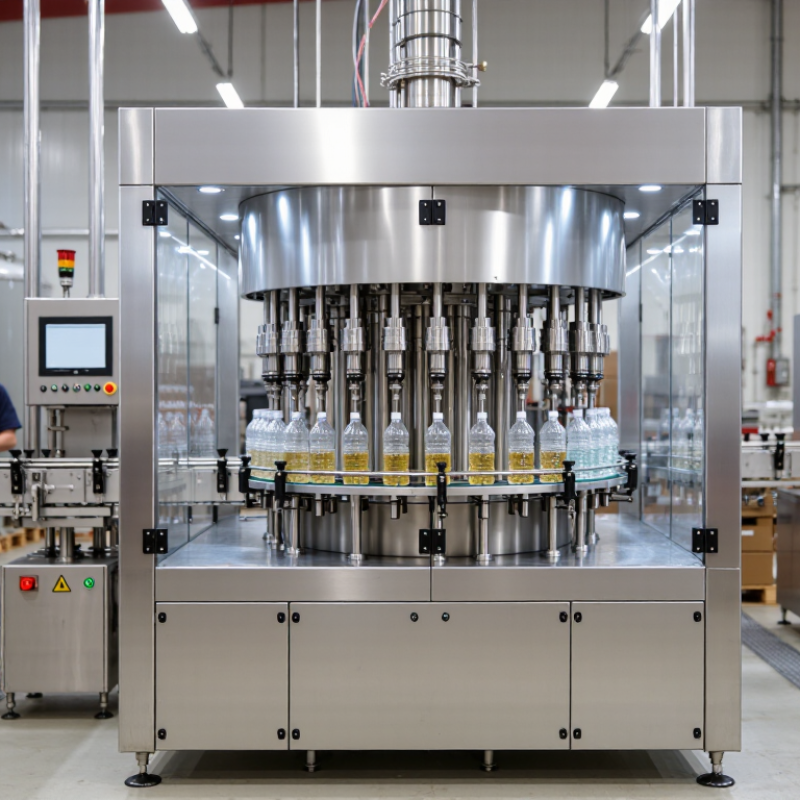
A China bottle filling machine is an automated system made in China for placing measured liquid into bottles. It usually includes a product tank, filling pump, filling heads, sensors, conveyor, and control panel. Some models also combine rinsing, capping, and labeling functions. The machine may handle water, juice, oil, cosmetics, or other permitted liquids, depending on its design.
Filling accuracy comes from the selected method. Gravity filling suits thin liquids with stable flow. Piston filling handles thicker products, such as creams or sauces. Flow-meter filling can provide precise volume control for many industrial applications. Stainless steel contact parts are important. Food and cosmetic production commonly require hygienic surfaces, smooth welds, and easy cleaning access. A proper machine should also allow quick adjustment for different bottle heights and neck sizes.
Look closely at real production details. Ask for a sample test using your bottles and liquid. Check the filling tolerance, changeover time, noise, and cleaning process. A clear manual and responsive technical support also matter. In my experience, impressive speed figures can hide difficult maintenance. That deserves attention. A machine that performs well in a showroom may struggle with foamy liquid or uneven bottles. Review the pump type, sensor quality, electrical specifications, and safety guards before choosing. The lowest price is not always the lowest operating cost.
Choosing a bottle filling machine starts with the product, not the bottle alone. Liquid thickness, foam, particles, temperature, and cleaning needs determine the right filling principle. Thin, free-flowing liquids often suit gravity or overflow fillers. Overflow systems can create consistent levels in transparent bottles. That visual uniformity matters on retail shelves. Thick creams and gels usually need piston or servo pump fillers. Controlled pressure supports accurate dosing without forcing air into the product. Small batches may favor flexible piston equipment. Continuous production may justify multiple filling heads.
Products that foam need a gentler approach. Diving nozzles, slower speeds, or bottom-up filling can reduce bubbles. For sauces, lotions, or suspensions, pump selection matters more than headline speed. A lobe, gear, or peristaltic pump may suit different shear and sanitation requirements. Products containing soft particles need wider passages and carefully shaped valves. Otherwise, fruit pieces or granules can bridge the nozzle. Test it first.
Bottle shape also changes the decision. Narrow necks, lightweight containers, and uneven bases may require guided nozzles or bottle stabilizers. I have seen a fast machine lose accuracy when flexible containers deformed under pressure. The machine was not truly wrong; the product match was incomplete. Ask for trials using your actual product, bottle, cap, and target fill volume. Check accuracy at the beginning, middle, and end of a run. Record cleaning time, changeover steps, rejected bottles, and operator adjustments. A reliable choice performs consistently, not merely quickly.
Choosing the best China bottle filling machine starts with measurable production needs, not catalogue promises. A machine rated at 2,000 bottles per hour may achieve less with thick liquid. Speed matters. Test the actual product, bottle, and closure together. Use a timed trial with at least three bottle sizes. Record output after the machine reaches stable operation. Startup speed can look impressive, but repeated stoppages reduce real capacity. Leave room for cleaning, changeovers, and minor adjustments.
Accuracy should be checked by weight or volume, not appearance. Fill ten or more samples from each nozzle. Calculate the average and compare every bottle with the target. A 1-gram difference can matter in high-volume production. Check whether the control system corrects drift automatically. Viscosity, temperature, foam, and liquid level can change results. Ask for calibration records and a documented test report. Do not accept only a polished demonstration.
Capacity includes hopper size, nozzle count, and available floor space. A larger hopper may reduce refilling, but it can complicate cleaning. Confirm the machine can run your planned shift without overheating. Review contact materials, guarding, emergency stops, and maintenance access. Reliable technical support also affects long-term output. Request spare-part lists, training details, and response times in writing. One overlooked point is operator skill. Even accurate equipment may perform poorly after rushed setup. That risk deserves a practical training trial before purchase.
How to Choose the Best China Bottle Filling Machine?
What Materials, Features, and Automation Should You Choose?
Start with the liquid, bottle, and cleaning routine. Stainless steel 304 suits many water-based products and routine production. Stainless steel 316 offers better resistance when salts, acids, or aggressive cleaning agents are present. Ask for material certificates, weld quality records, and seal specifications. These details matter more than a polished machine exterior.
Bottle material also affects the filling system. PET bottles may need gentle handling to prevent distortion. Glass bottles require stable guides, controlled speed, and protection against impact. For viscous liquids, piston or servo-driven filling often provides better control than simple gravity filling. Confirm the machine’s real accuracy using your product, not only water during a factory demonstration. That test can expose dripping, foam, or inconsistent fill levels.
Choose features that reduce measurable work. Quick-change parts, tool-free adjustment, and automatic bottle detection can shorten changeovers. A programmable control system should record settings and show alarms clearly. It should not require a specialist for every small adjustment. Clean-in-place functions can save labor, but check whether internal corners remain accessible for inspection. More automation is not always better. I have seen operators struggle with complicated systems they could not maintain. A practical machine includes spare seals, clear manuals, remote technical support, and a documented acceptance test. Leave room for improvement. Production conditions rarely stay perfect.
| Machine Type | Best-Fit Products | Typical Bottle Materials | Typical Filling Range | Typical Speed Range* | Typical Accuracy | Recommended Automation Level | Key Features to Select | Main Advantages | Important Limitations |
|---|---|---|---|---|---|---|---|---|---|
| Gravity Filler | Low-viscosity liquids such as water, juice, and non-carbonated beverages | PET HDPE Glass | 100 ml–5 L | 600–3,000 bottles/hour | Approximately ±1% to ±2% | Semi-automatic for small batches; automatic for continuous production | Adjustable fill valves, liquid-level control, drip-free nozzles, bottle-height adjustment | Simple construction, low maintenance cost, suitable for clean and free-flowing liquids | Not suitable for thick, foamy, or particle-containing products |
| Overflow Filler | Water, shampoo, liquid soap, and other products where a uniform liquid level is important | PET HDPE Glass | 100 ml–2 L | 600–2,400 bottles/hour | Approximately ±0.5% to ±1% | Automatic operation is preferred for consistent bottle positioning | Recirculation tank, diving nozzles, anti-foam control, adjustable overflow height | Creates a visually consistent fill level even when internal bottle volume varies slightly | Product may foam during filling; recovered liquid must be managed hygienically |
| Piston Filler | Thick liquids, sauces, creams, gels, honey, and products with suspended particles | PET HDPE Glass PP | 10 ml–5 L | 300–1,800 bottles/hour | Approximately ±0.5% to ±1% | Automatic or servo-controlled for frequent recipe and volume changes | Sanitary piston design, quick-change filling heads, hopper agitator, anti-drip valves | Handles high viscosity and can provide accurate volumetric dosing | More moving parts; cleaning and seal replacement require regular attention |
| Peristaltic Pump Filler | Pharmaceutical liquids, laboratory products, eye drops, and sensitive low-viscosity liquids | Glass PET HDPE | 1 ml–1 L | 120–1,200 bottles/hour | Approximately ±0.5% to ±1% | Servo or programmable automatic control for precise small-volume dosing | Single-use or replaceable tubing, speed control, recipe storage, no product-contact pump parts | Reduces cross-contamination risk and is suitable for sterile or highly sensitive products | Tubing is a consumable and may not be suitable for abrasive or very viscous products |
| Magnetic Flowmeter Filler | Conductive liquids such as water-based beverages, chemicals, and cleaning solutions | PET HDPE Glass | 100 ml–20 L | 600–6,000 bottles/hour | Approximately ±0.2% to ±0.5% | Fully automatic for medium- and high-volume production | Sanitary flow sensors, automatic calibration, no-flow detection, recipe management | Accurate, fast, and has minimal mechanical wear in the product path | Requires electrically conductive liquid and a properly grounded installation |
| Net-Weight Filler | Liquids and semi-liquids sold by mass, including oils, chemicals, and food products | PET HDPE Metal Glass | 250 g–25 kg | 120–1,200 containers/hour | Approximately ±0.1% to ±0.5% | Automatic weighing and feedback control are strongly recommended | Load cells, tare compensation, automatic zero tracking, bulk and dribble filling | Controls the actual product mass and compensates for differences in container volume | Requires stable floors, accurate load cells, and protection from vibration and airflow |
| Auger Powder Filler | Powders such as flour, spices, detergent, nutritional powder, and pharmaceutical powders | PET HDPE Glass Metal | 5 g–5 kg | 300–2,400 containers/hour | Approximately ±1% to ±2% | Servo-driven automatic dosing is preferred for repeatable powder control | Agitated hopper, dust extraction, auger change parts, level sensor, anti-bridging design | Suitable for free-flowing and many cohesive powders with adjustable dosing control | Dust, product bridging, and bulk-density variation can affect filling accuracy |
| Volumetric Cup Filler | Granules and free-flowing solids such as rice, seeds, beans, and pellets | PET HDPE Glass Pouches | 10 g–5 kg | 600–3,600 containers/hour | Approximately ±1% to ±3% | Automatic indexing and multi-head operation for higher throughput | Interchangeable cups, product-level control, vibration adjustment, dust-resistant enclosure | Fast and relatively simple for products with stable particle size and bulk density | Weight variation increases when particle size, shape, or density changes significantly |
| Carbonated Beverage Counter-Pressure Filler | Carbonated water, soda, beer, and other gas-containing beverages | PET Glass Aluminum Can | 200 ml–2 L | 600–12,000 containers/hour | Typically controlled by fill-level and pressure stability | Fully automatic with pressure, temperature, and conveyor synchronization | CO₂ pre-evacuation, counter-pressure control, foam reduction, pressure-rated product circuit | Reduces carbonation loss and excessive foaming during filling | Requires controlled product temperature, gas pressure, and specialized sanitation procedures |
| Aseptic or Ultra-Clean Filler | Long-life beverages, dairy alternatives, and microbiologically sensitive products | PET HDPE Glass Carton-Compatible Containers | 100 ml–2 L | 1,000–12,000 containers/hour | Depends on validated process and filling system | Fully automatic with cleanroom or controlled-environment integration | CIP/SIP capability, sterile-air filtration, hygienic enclosure, automated sterilization monitoring | Supports extended shelf life when the complete process is properly validated | High capital cost, complex validation, and strict environmental and sanitation requirements |
Supplier checks should begin with evidence, not attractive photos. Request the company’s registration details, factory address, production records, and recent customer references. A video tour helps, but an independent factory audit gives stronger evidence. Ask whether the machine suits your bottle shape, liquid viscosity, filling range, and planned output. Request a sample test using your actual bottles and liquid. Record fill accuracy, changeover time, cleaning steps, and rejected bottles.
Compliance needs careful checking. Confirm electrical documents, material certificates, safety features, and standards required in your destination market. Product-contact parts should have suitable food-grade or application-specific documentation. Do not accept vague promises. Ask for a complete technical file before payment.
Costs include more than the machine price. Add shipping, installation, training, taxes, spare parts, utilities, and possible format changes. A low quote can become expensive.
After-sales support deserves equal attention. Get warranty terms, remote troubleshooting methods, response times, and spare-parts availability in writing. Ask who will support commissioning and whether technicians can provide clear operating videos.
No checklist is perfect. My own review would still include a risk allowance for delays, replacement parts, and operator learning. That small reserve can protect production when reality differs from the quotation.


30 Beach Street, Mt Vernon, NY 10550
914-239-3878 sale@bbqmachine.com
© 2025 by TurboFil Packaging Machines, LLC