 Skip to content


How to Choose a Labeling Machine for Your Business?
A label can look simple on a product. Applying it accurately, at speed, across changing container shapes is harder. A labeling machine must suit the product, label stock, line speed, and available floor space—not just the projected output on a sales sheet. Small details matter: a curved bottle may need different handling from a flat carton, and a label roll change can interrupt a busy shift.
Industry data shows why the choice deserves care. PMMI’s 2023 State of the Industry report put U.S. packaging machinery shipments at $10.9 billion in 2022, reflecting substantial investment in production equipment. That figure covers packaging machinery broadly, not labeling machines alone. Still, it signals a competitive market where reliability, service access, and integration can affect the return on investment. PMMI vice president Jorge Izquierdo has emphasized the value of matching automation decisions to a manufacturer’s actual operating needs. That is a useful lens for comparing equipment.
Start with the work the machine must perform. How many containers pass the line each minute? How often do package sizes change? Will operators need tool-free adjustments, or is a technician available? Ask suppliers to demonstrate the machine using your own containers and labels. Watch closely for skewed edges, wrinkles, missed labels, and time spent clearing jams. Real production is rarely as tidy as a showroom test. A little skepticism helps. This guide outlines the practical questions businesses can use to shortlist a labeling machine and assess its fit before committing to a purchase.
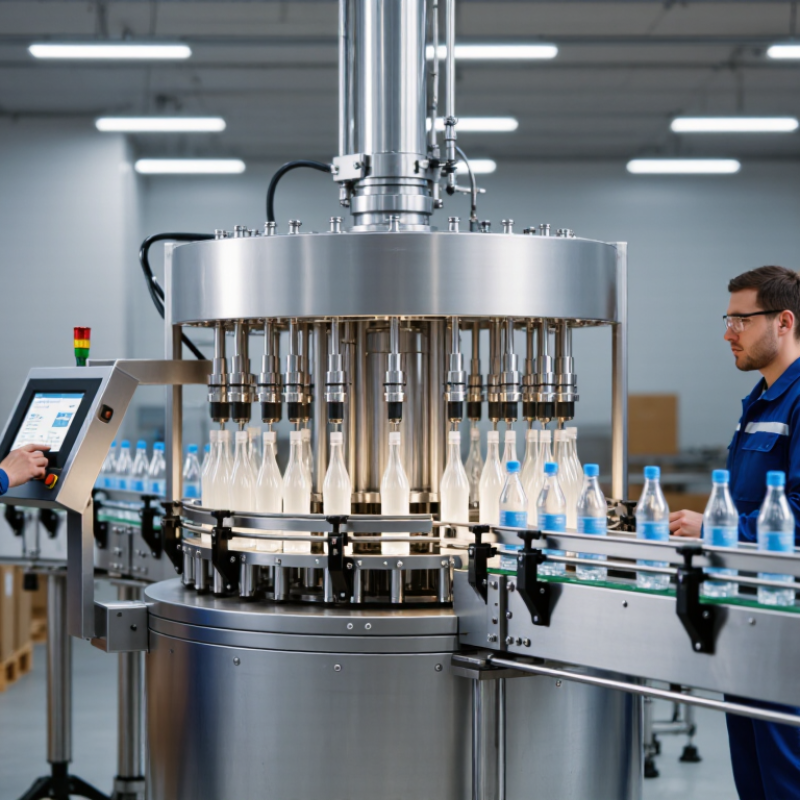
Define Your Labeling Requirements and Production Goals
Before comparing machines, define what the line must label each day. Record container shapes and materials, label dimensions, placement, adhesive type, and the number of product variations. Note your target speed, shift length, changeover frequency, and acceptable placement tolerance. A line running glass bottles needs different handling from one labeling flexible pouches. Small details matter.
Set goals using actual production data, not a best-case estimate. Track current output, rejected labels, manual adjustments, and minutes lost during roll changes. A 2024 study by Deloitte and The Manufacturing Institute estimated that U.S. manufacturing could need 3.8 million workers by 2033, with nearly 1.9 million jobs potentially unfilled. This is not labeling-specific, but it makes staffing assumptions worth examining when setting automation goals. A faster machine may not help if feeding, inspection, or changeovers remain bottlenecks. Not always. Check the whole line.
Tips: Run a timed trial with your real containers and labels. Include a product changeover, a fresh label roll, and a short production run. Record the results, then compare them with your daily target. Estimates can be optimistic; verify the numbers on the actual line.
How to Choose a Labeling Machine for Your Business? — Define Your Labeling Requirements and Production Goals
| Requirement or Goal | Details to Define | Possible Machine Fit | Planning Considerations |
|---|---|---|---|
| Container type and shape | Record whether products are round, flat-sided, tapered, oval, or irregular, along with their dimensions and material. | Wraparound systems commonly suit cylindrical containers; front-and-back or panel applicators suit many flat-sided containers. | Test the actual container. Surface texture, taper, seams, and dimensional variation can affect label placement and adhesion. |
| Label material and format | Specify label width and length, roll direction, gap or mark sensing, adhesive type, and whether labels are paper or film. | Pressure-sensitive roll-label equipment is a common choice for self-adhesive labels. Other label formats may require different application equipment. | Confirm the label roll’s core, outside diameter, unwind direction, and sensor compatibility with the machine supplier. |
| Required placement | Define the label position, orientation, number of labels per product, and acceptable placement tolerance. | A basic applicator may fit straightforward placement; product handling or inspection features may be needed for tighter positioning requirements. | Agree on a measurable placement tolerance and test samples from normal production, not just ideal containers. |
| Current production rate | Measure actual good units per minute or hour, including product changeovers, stoppages, and rejected units. | Manual or semi-automatic equipment can suit low-volume work; automatic systems are generally considered as output and consistency requirements increase. | Do not size a machine from its advertised maximum speed alone. Ask for a demonstrated rate using your product and label. |
| Future production goals | Estimate expected output growth, planned operating shifts, and likely changes in product range. | A modular automatic system may offer room to add product handling, inspection, or additional application stations later. | Compare the cost of spare capacity with the cost of a later upgrade, including installation and production downtime. |
| Product changeovers | List the number of container and label variations and how often operators switch between them. | Equipment with adjustable guides, saved settings, or tool-free change parts can help with frequent changeovers. | Ask how long a changeover takes and which parts, settings, or operator skills it requires. |
| Line integration | Check conveyor height and speed, product spacing, line direction, available floor space, and upstream or downstream controls. | Standalone or in-line configurations are available, depending on how products are conveyed and presented for labeling. | Confirm electrical, compressed-air, guarding, and communication requirements before installation planning. |
| Quality checks and traceability | Decide whether the process needs label presence checks, barcode verification, print inspection, or rejection of nonconforming products. | Inspection sensors or vision systems can be integrated when verification is part of the production requirement. | Define what counts as a pass or fail and how rejected products will be identified and removed from the line. |
| Labor, maintenance, and budget | Estimate operator availability, cleaning needs, routine maintenance, training, and total project budget. | Choose a level of automation that matches production needs and the team’s ability to operate and maintain the equipment. | Include installation, change parts, consumables, training, spare parts, and planned downtime when comparing options. |
Planning note: Machine suitability and achievable output vary with the product, label, line setup, and operating conditions. Validate requirements with representative product samples and a production trial before purchase.
Related Posts
-
What is an Automatic Labeling Machine and How Does It Work?
-
What is an Automatic Labeling Machine and How Does It Work
-
What is an Automatic Labeling Machine and How Does It Work?
-
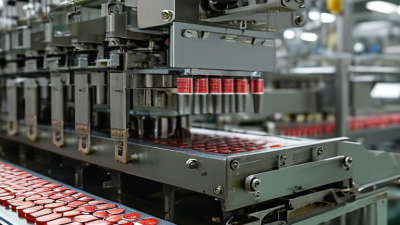
What is a labeling machine and how does it work?
-
The Ultimate Guide to Choosing the Right Label Applicator Machine for Your Business
-
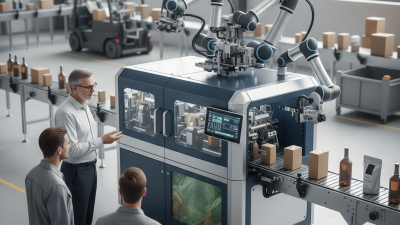
2026 Top Label Applicator Machine Trends and Innovations?



30 Beach Street, Mt Vernon, NY 10550
914-239-3878 sale@bbqmachine.com
© 2025 by TurboFil Packaging Machines, LLC
© 2025 by TurboFil Packaging Machines, LLC