Skip to content
Choosing a paste filling machine is not simply a capacity decision. It affects product quality, labor, cleaning time, and customer trust.
PMMI’s 2024 packaging machinery reports describe continued investment in automation, labor efficiency, and flexible production lines. Smithers’ The Future of Global Packaging to 2028 also highlights sustainability, lightweight containers, and equipment adaptability. These trends matter when filling products such as sauces, creams, cosmetics, adhesives, or pharmaceutical pastes.
Jorge Izquierdo, Vice President of Market Development at PMMI, has emphasized, “Automation should solve a real production problem, not create unnecessary complexity.” That principle is easy to overlook.
A suitable paste filling machine must match the product’s viscosity, temperature, particle size, and container design. Thick honey-like paste may require a servo-driven piston filler. A gritty sauce may need larger valves and wider nozzles. Small jars demand careful control of dripping and fill accuracy.
Look beyond the advertised speed. Ask about repeatability, changeover time, hopper heating, pump wear, and cleaning procedures. Request trial filling with your actual product. A machine that performs well with water may struggle with dense cream.
Manufacturers should also verify food-contact materials, safety controls, documentation, and after-sales support. These details protect production reliability and regulatory confidence.
The fastest machine is not always the best investment. A slower system with stable dosing may reduce waste and rework. That said, no selection guide can replace testing under real factory conditions. This is where many purchasing decisions become imperfect. Data helps, but practical experience still decides.
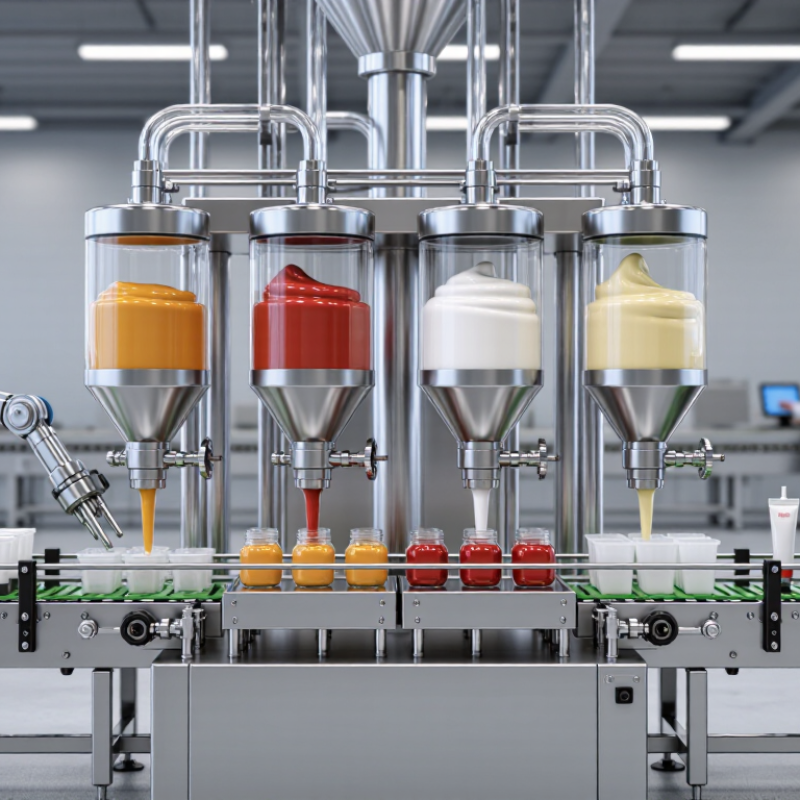
Choosing a paste filling machine starts with the product, not the machine catalog. Describe viscosity at the actual filling temperature. A honey-like cream behaves differently from a thick ointment. Record density, particle size, stickiness, and settling behavior. Small particles matter. Note the container shape, neck diameter, and target fill weight. A 500-gram jar needs different handling from a narrow tube.
Define your production requirements clearly. State the desired output per minute, fill accuracy, batch size, and working hours. Include the smallest and largest containers. A piston system may suit repeatable portions, while a progressive cavity system can handle delicate or particulate mixtures. Specify contact materials, cleaning methods, and acceptable product loss. Ask for a trial using your own paste. Measure at least ten fills, then compare the weights and surface appearance.
Do not rely on viscosity numbers alone. Viscosity can change with shear, temperature, and storage time. I have seen a trial run smoothly in the morning, then slow down after warming. That detail is easy to miss. Request written test conditions, accuracy limits, cleaning steps, and changeover times. Check whether operators can reach valves and seals without awkward tools. A complicated machine may look impressive, but it can create avoidable downtime. Reconsider the specification after testing; your first assumptions may be wrong.
How to Choose a Paste Filling Machine?
Learn the Main Types of Paste Filling Machines
Piston filling machines suit thick pastes with stable viscosity. They draw a measured volume into a cylinder, then push it into each container. This type handles creams, sauces, gels, and dense cosmetic formulas well. Experienced operators watch piston seals closely. Worn seals can cause dripping and inconsistent fill weights.
Pump filling machines offer more flexibility for semi-fluid or heavy products. Gear pumps provide steady flow for smooth pastes. Lobe pumps are gentler and may protect products containing soft particles. However, pump selection depends on temperature, viscosity, and particle size. A pump that works beautifully today may struggle after a formula change.
Peristaltic filling machines keep the product inside disposable tubing. This design supports cleaner changeovers and reduces cross-contamination risks. It works best with low to medium production speeds and carefully selected tubing. Tubing wear can become an overlooked problem. I have seen small cracks create large cleanup tasks. Check the product path, filling accuracy, container shape, and cleaning method before choosing. A simple test with the real paste is more reliable than a catalog estimate. Some results may still need adjustment.
Choosing a paste filling machine starts with production requirements, not the advertised speed. Paste viscosity can change with temperature, ingredients, and storage time. A thick tomato paste needs different piston force from a smooth cosmetic cream. Test the actual product before selecting the pump. It matters.
Match the filling range to your smallest and largest containers. A machine producing 30-gram sachets may struggle with 1-kilogram jars. Check dosing accuracy, nozzle design, hopper capacity, and changeover time. The 2023 Fortune Business Insights report valued the global food processing equipment market at approximately USD 52.36 billion. Its projected growth reflects rising automation demand, but market growth does not guarantee a suitable machine. Your batch size matters more. A 20-nozzle system sounds productive, yet it may waste space during short production runs.
Measure your required output per hour, then allow time for cleaning and adjustments. PMMI’s 2024 packaging machinery industry data reported continued investment in automation across processing and packaging operations. This supports choosing servo-driven controls when repeatability is critical. However, pneumatic systems may remain practical for simpler lines. I would also inspect the filling head personally. Look for dripping, trapped paste, and difficult seals. Small defects become expensive at scale. Do not ignore operator experience. A complex interface can reduce real output, even when the specification sheet looks impressive. Forecasts can be wrong. Your trial results should carry more weight.
How to Choose a Paste Filling Machine?
Choosing a paste filling machine starts with material compatibility, not speed. Your paste may contain oils, powders, fibers, or sensitive ingredients. Each feature affects machine performance.
Request a product trial before purchase. Test the exact paste, container, and target fill size. Check whether seals, hoses, valves, and nozzles resist swelling or wear. Some pastes flow smoothly at room temperature but become stiff during a cool morning shift. Gentle heating may help, but excessive heat can change texture or quality. That assumption can fail.
Filling accuracy requires more than a displayed setting. Weigh at least ten filled containers from one production run. Compare the average weight and the variation between samples. A piston system may suit thick, consistent pastes, while a servo-controlled system can offer finer adjustment. Use a wide nozzle for particulate mixtures, but confirm that it does not create dripping or air pockets. Small details matter.
Do not trust one trial. Inspect the paste left inside the hopper and check whether the final containers match the first ones. Record temperature, batch viscosity, fill speed, and nozzle size. These records make troubleshooting more reliable. A machine that performs well today may struggle after a formula change. Plan room for adjustment, because real production is rarely as perfect as a demonstration.
| Machine Type | Suitable Paste Characteristics | Typical Materials | Material Compatibility | Typical Filling Accuracy | Best Container Formats | Key Selection Considerations |
|---|---|---|---|---|---|---|
| Piston Filler | Medium to high viscosity; smooth or mildly particulate products | Thick sauces, creams, gels, syrups, cosmetic lotions and pastes | Excellent for consistent products with stable flow behavior | Typically ±0.5% to ±1.0% | Jars, bottles, tubs and wide-mouth containers | Use a larger valve and piston passage for products containing particles. Product temperature should remain consistent because viscosity changes can affect volume. |
| Servo-Driven Piston Filler | Medium to very high viscosity; products requiring repeatable dosing | Nut butters, thick creams, filled sauces, concentrated pastes and heavy gels | Excellent when the wetted parts match the product chemistry | Typically ±0.2% to ±0.5% | Containers with controlled neck sizes, jars and pails | Offers precise piston positioning and recipe control. Confirm that seals, hoses and contact surfaces tolerate the product’s temperature, acidity, oils and cleaning chemicals. |
| Peristaltic Pump Filler | Low to medium viscosity; shear-sensitive or contamination-sensitive products | Liquid gels, pharmaceutical creams, mild lotions and hygienic products | Very good because the product contacts only the tubing | Typically ±0.5% to ±1.5% | Small bottles, tubes, vials and narrow containers | Check tubing compatibility with oils, solvents and temperature. Tubing wear, elasticity and pulsation can influence accuracy over time. |
| Progressive Cavity Pump Filler | High viscosity, abrasive, shear-sensitive or particulate products | Chunky sauces, fruit fillings, pastes with solids and abrasive compounds | Excellent for difficult products when rotor and stator materials are correctly selected | Typically ±0.5% to ±1.0% | Jars, bottles, pouches and larger containers | Provides a steady, low-pulsation flow. Select food-grade or chemical-resistant elastomers and allow access for cleaning and inspection. |
| Auger Filler | Dry, powdered or granulated products; not normally intended for wet pastes | Powders, spice blends, dry mixes and free-flowing granules | Poor for most wet or sticky pastes | Typically ±1.0% to ±3.0% | Jars, cans, sachets and pouches | Choose this system only when the material behaves as a powder. Sticky or cohesive pastes may bridge, smear or compact unevenly in the hopper. |
| Gravity or Time-Pressure Filler | Low viscosity and free-flowing products | Thin sauces, liquid cleaners, oils and low-viscosity syrups | Conditional for thin pastes that flow easily | Typically ±1.0% to ±3.0% | Bottles, cans and simple open-mouth containers | Suitable for economical applications with wider tolerances. Filling speed and accuracy are strongly affected by viscosity, foaming and product level. |
| Tube Filling and Sealing Machine | Medium to high viscosity products designed for tube packaging | Toothpaste, ointments, creams, cosmetic masks and adhesive pastes | Excellent for tube-compatible formulations | Typically ±1.0% to ±2.0% | Plastic, laminate or metal tubes | Verify tube diameter, fill height, sealing method and product deaeration requirements. Particulate products may require a wider filling nozzle. |
| Hot-Fill Piston System | Products that become less viscous when heated and set after filling | Wax-based products, hot creams, confectionery fillings and thermal pastes | Good only when all wetted parts and seals tolerate the filling temperature | Typically ±0.5% to ±1.5% | Jars, tins, cartridges and heat-resistant containers | Control product and hopper temperature carefully. Confirm operator protection, thermal insulation and compatibility of seals, hoses and container materials. |
| Accuracy ranges are typical engineering values rather than guaranteed results. Actual performance depends on product viscosity, temperature, air entrainment, particle size, fill volume, nozzle design, machine calibration and operator setup. Always validate the machine with the actual product and container before purchase. | ||||||
Choosing a paste filling machine begins with operation. Test the machine using your real product, not water alone. Measure fill accuracy, nozzle drip, changeover time, and container stability. A thick sauce may leave a string between the nozzle and jar. That small detail can increase waste and cleaning labor. PMMI industry reports repeatedly identify workforce shortages as a major packaging challenge. Simple controls and recipe storage therefore have practical value.
Maintenance should be visible and measurable. Ask for tool-free access to seals, pumps, and product-contact parts. Record cleaning time, spare-part prices, and average replacement intervals. A machine that runs quickly but needs frequent disassembly may lose its advantage. I would also request a maintenance demonstration. Manuals can look complete, yet operators may still struggle with one hidden valve. Keep critical seals on site. Downtime is expensive.
Safety must influence the purchase before price negotiations. OSHA estimates that machinery causes about 18,000 amputations and 36,000 serious injuries each year in the United States. Check guarding, emergency stops, interlocks, and lockout procedures during a live demonstration. Verify that cleaning modes cannot unexpectedly restart the pump. Calculate total cost using purchase price, labor, utilities, sanitation, waste, training, and downtime. The lowest quotation is not always the lowest cost. Sometimes, the most honest evaluation reveals an inconvenient weakness. That weakness is useful before installation.


30 Beach Street, Mt Vernon, NY 10550
914-239-3878 sale@bbqmachine.com
© 2025 by TurboFil Packaging Machines, LLC