China Top 10 Coffee Packaging Bags Types for Global Buyers

China Top 10 Coffee Packaging Bags Types for Global Buyers begins with a practical question: what must the bag protect?

Freshly roasted coffee releases carbon dioxide. Oxygen, moisture, light, and heat can weaken its aroma. A suitable bag manages these risks during storage, ocean freight, warehouse handling, and retail display.

Packaging expert Dr. Susan E. M. Selke offers a useful principle: “Packaging should protect the product, communicate its value, and limit unnecessary impact.” This idea fits modern coffee sourcing. A bag is not merely a printed wrapper. It is a small technical system.

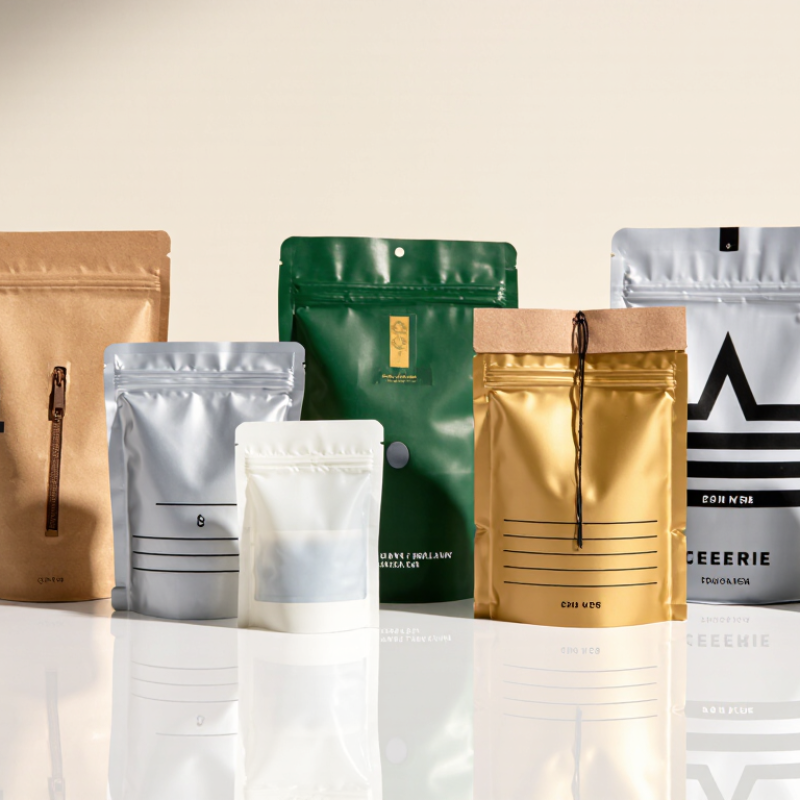
China suppliers now produce many Coffe Packaging Bags formats. These include flat-bottom bags, side-gusset bags, quad-seal bags, stand-up pouches, vacuum bags, and recyclable mono-material structures. Some use one-way degassing valves. Others add tin ties, zippers, laser scores, or aluminum barriers. Each feature changes cost, shelf life, filling speed, and consumer convenience.

A 250-gram retail pouch may need a reliable zipper and strong heat seals. A one-kilogram bag may require wider gussets and better drop resistance. Kraft paper can create a natural appearance. It does not automatically provide strong oxygen protection.

That assumption deserves reflection.

No single bag wins every market. Roasted beans, ground coffee, capsules, and specialty micro-lots need different protection. Buyers should request material specifications, valve details, seal samples, migration documentation, and real transport testing. Factory photographs help, but they are not proof of performance.

This guide reviews ten widely used Chinese coffee packaging bag types. It compares structure, appearance, protection, customization, sustainability considerations, and purchasing risks. The goal is not to select the most attractive bag. It is to select the most dependable one for a specific coffee, market, and supply chain.
China Top 10 Coffee Packaging Bags Types for Global Buyers

Coffee Packaging Bags: Purpose, Structure, and Global Market Context

Coffee packaging bags protect roasted beans from oxygen, moisture, light, and aroma loss. Their structure also supports transport, filling efficiency, shelf display, and consumer handling. The International Coffee Organization reported global coffee consumption of about 170.3 million 60-kilogram bags in 2021/22. That scale makes packaging performance a commercial requirement, not a decorative choice.

The ten common formats include side-gusset bags, flat-bottom bags, quad-seal bags, pillow pouches, stand-up pouches, sachets, stick packs, vacuum bricks, paper bags, and valve bags. Each format serves a different supply chain.

A one-way degassing valve releases carbon dioxide from freshly roasted coffee while limiting oxygen entry. Typical laminates combine printed film, barrier layers, and heat-sealing materials. Recyclability depends on the exact material combination and local collection systems.

Specifications should follow roasting date, grind size, filling speed, shipment distance, and expected shelf life. Smithers’ coffee packaging analysis identifies flexible formats as important because they reduce material use and suit high-speed filling. Yet “lighter” does not always mean better. A thin bag may wrinkle, leak, or lose barrier performance during long ocean transport.

I have seen buyers focus on artwork first, then discover that seal strength was inadequate. Food-contact declarations, migration testing, valve quality, and seal inspection deserve equal attention. A perfect bag does not exist. Performance must match the real route.

China’s Top 10 Coffee Packaging Bag Types Explained

China’s Top 10 Coffee Packaging Bag Types Explained

China supplies diverse coffee packaging formats for international buyers. The main ten are flat-bottom bags, side-gusset bags, quad-seal bags, pillow bags, stand-up pouches, vacuum bags, three-side-seal bags, block-bottom bags, kraft-paper laminated bags, and recyclable mono-material pouches. Each format serves a different filling line, shelf display, and freshness target.

The International Coffee Organization reported global coffee consumption of about 177.9 million 60-kilogram bags in 2023/24. That volume increases pressure on packaging efficiency. Flat-bottom and block-bottom bags stand firmly on retail shelves. Side-gusset and quad-seal bags offer more usable volume for roasted beans. Pillow bags reduce material use and suit high-speed packing. Stand-up pouches work well for ground coffee and smaller portions. Vacuum bags remove air before sealing, but they can lose shape during transport.

One-way valve bags release carbon dioxide from freshly roasted coffee. They are common for whole beans, yet the valve adds cost and does not replace good sealing. Kraft-paper laminates provide a natural appearance, while their inner layers still control oxygen and moisture. Mono-material pouches may simplify recycling, although local collection systems remain uneven. Smithers’ flexible packaging analysis highlights continued demand for lightweight, recyclable structures. The report also shows that recyclability depends on both design and infrastructure. A practical mistake is choosing appearance before barrier testing. Buyers should request oxygen transmission, moisture transmission, seal strength, and drop-test data. Small details matter.

China Top 10 Coffee Packaging Bags Types for Global Buyers - China’s Top 10 Coffee Packaging Bag Types Explained
Rank Coffee Packaging Bag Type Typical Structure or Material Common Capacity Range Valve / Closure Options Barrier Performance Best-Suited Coffee Products Main Advantages Important Considerations for Global Buyers
1 Side-Gusset Coffee Bag Multi-layer laminated film, commonly PET/PE, PET/CPP, or paper-based laminate 250 g to 5 kg One-way degassing valve, tin tie, zipper, or heat seal High Whole beans, ground coffee, bulk and retail coffee Large printable panels, stable shelf presentation, and efficient use of filling equipment Requires accurate filling and sealing; the laminate specification should match the required oxygen and moisture barrier.
2 Flat-Bottom Coffee Bag Multi-layer flexible laminate with a reinforced flat base 250 g to 2 kg One-way valve, zipper, or heat seal High Premium whole beans, specialty coffee, and retail ground coffee Excellent shelf stability, broad front and back panels, and efficient use of retail space Usually uses more material than a simple pouch and may have a higher packaging cost.
3 Quad-Seal Coffee Bag Four-corner sealed multi-layer laminate 500 g to 5 kg One-way degassing valve, zipper, or heat seal High Whole beans, coffee blends, and larger retail packs Strong structure, excellent block-bottom appearance, and good resistance to shape deformation Corner seals and forming equipment must be controlled carefully to reduce leakage risks.
4 Stand-Up Pouch Flexible laminate with a bottom gusset; available in conventional or recyclable film structures 100 g to 1 kg Zipper, tear notch, spout for selected formats, or heat seal Medium to High Ground coffee, coffee samples, flavored coffee, and small retail packs Lightweight, space-efficient, convenient to open, and suitable for many custom shapes For roasted whole beans, a degassing valve and a suitable high-barrier structure are normally required.
5 Flat Pouch / Pillow Bag Flexible laminated film formed with a back or center seal 50 g to 500 g Heat seal, tear notch, or optional zipper Medium to High Single-serve coffee, ground coffee, trial packs, and promotional sizes Low material consumption, economical production, and efficient shipping It normally has limited shelf stability and may not stand upright without external support.
6 Kraft Paper Coffee Bag Paper outer layer combined with PE, EVOH, metallized film, or aluminum-based inner barrier 250 g to 1 kg Valve, zipper, tin tie, or heat seal Medium to High Artisan coffee, specialty coffee, and natural-look retail packaging Paper appearance, strong print appeal, and a tactile premium look Paper alone is not a sufficient barrier for roasted coffee; the inner barrier layer is essential for freshness protection.
7 Recyclable Mono-Material Coffee Pouch Predominantly PE or PP mono-material film with compatible inks, coatings, and closures 100 g to 1 kg One-way valve, zipper, or heat seal depending on the structure Medium to High Ground coffee and whole beans where packaging circularity is a priority Designed to simplify material identification and improve compatibility with certain recycling systems Actual recyclability depends on local collection and recycling infrastructure; barrier performance may differ from aluminum-based laminates.
8 Aluminum Foil Barrier Bag Plastic laminate incorporating an aluminum foil layer, such as PET/AL/PE 250 g to 5 kg One-way degassing valve, zipper, or heat seal Very High Freshly roasted coffee, long-distance shipments, and extended shelf-life applications Excellent protection against oxygen, moisture, light, and aroma loss The mixed-material construction is generally more difficult to recycle than a mono-material structure.
9 Degassing Valve Coffee Bag Any suitable high-barrier bag fitted with a one-way valve for carbon dioxide release 200 g to 5 kg One-way valve plus zipper or heat seal High Freshly roasted whole beans and ground coffee that release carbon dioxide Allows gas to escape while helping prevent oxygen from entering the package Valve placement, sealing quality, and bag barrier are critical; the valve does not replace proper roasting, filling, and storage practices.
10 Coffee Sample Sachet Small high-barrier laminate, often PET/PE, PET/CPP, or foil-based film 5 g to 100 g Heat seal, tear notch, or easy-open seal Medium to High Samples, hotel portions, subscription inserts, and promotional coffee packs Suitable for portion control, low-cost distribution, and product testing campaigns Small formats have a relatively high packaging-to-product ratio and usually do not include a degassing valve.

How Bag Designs Protect Coffee Freshness and Product Quality

China Top 10 Coffee Packaging Bags Types for Global Buyers

Coffee freshness depends on more than attractive printing. Bag design controls oxygen, moisture, light, and aroma loss during storage and transport. Common choices include quad-seal bags, side-gusset bags, flat-bottom bags, stand-up pouches, pillow bags, vacuum bags, and valve bags. Each format serves different filling lines and retail needs.

A high-barrier laminate helps block oxygen and humidity. Foil-based structures offer strong light protection, while metalized films reduce weight and material use.

A one-way degassing valve releases carbon dioxide from freshly roasted coffee without allowing outside air inside. This detail matters during the first several days after roasting.

Resealable zippers also limit exposure after opening, but only when consumers press the seal firmly.

Small details protect quality.

Heat-seal width should remain consistent across the bag. Weak seals may leak during container handling or long-distance shipping. Flat-bottom and side-gusset designs improve shelf stability, yet their extra folds can create sealing challenges.

Vacuum bags reduce air space, although excessive pressure may damage fragile roasted beans. In practical packaging checks, I would test seal strength, valve performance, drop resistance, and aroma retention before approving a large order.

Appearance can mislead. A beautiful bag may still have poor barrier protection. Packaging selection should match roast level, filling equipment, shipment climate, and expected shelf life.

No bag preserves coffee forever.

Key Selection Criteria for Global Coffee Packaging Buyers

China Top 10 Coffee Packaging Bags Types for Global Buyers

Key Selection Criteria for Global Coffee Packaging Buyers

Choosing coffee bags from China requires more than comparing prices. Buyers should match the bag structure with roast level, filling speed, shipping distance, and retail position. Common options include kraft paper bags, flat-bottom bags, side-gusset bags, quad-seal bags, zipper pouches, and valve bags. Freshly roasted coffee needs reliable degassing performance. A one-way valve can release carbon dioxide while limiting outside air.

Material selection deserves careful review. High-barrier laminates protect aroma during long ocean shipments. Mono-material structures may support easier recycling in some markets, but their barrier performance can differ. Ask suppliers for oxygen transmission, moisture transmission, seal-strength, and migration test data. Test samples under real conditions. A bag that performs well in a showroom may wrinkle or leak after rough transport.

Printing quality also matters. Check color consistency, barcode readability, zipper alignment, and valve placement. Request production samples before approving mass production. Confirm food-contact documentation for each destination market, because requirements vary by country. Packaging machinery compatibility is often overlooked. Measure bag width, gusset depth, and filling tolerance carefully. Small errors can stop an automated line.

Cost remains important, but the cheapest quotation may conceal thicker ink coverage, weak seals, or inconsistent dimensions. I have seen attractive samples fail during drop testing. That risk is easy to underestimate. Buyers should evaluate supplier communication, inspection records, corrective actions, and lead-time reliability. No bag fits every market. A practical trial order may reveal weaknesses before a large purchase does.

China Sourcing, Customization, Quality Control, and Compliance

China’s coffee packaging supply chain is expanding with global demand. The International Coffee Organization reported 177.9 million 60-kilogram bags of coffee consumption in 2023/24. For buyers, China offers practical access to side-gusset, flat-bottom, quad-seal, stand-up, and valve bags. The correct format depends on roast level, filling equipment, shipping distance, and shelf-life targets.

Sourcing should begin with a written specification. Include laminate structure, thickness, valve type, zipper performance, dimensions, tolerances, and printing limits. The Flexible Packaging Association valued the United States flexible packaging market at about $42.9 billion in 2023. This reflects strong demand, but not every low-cost quotation represents reliable value. Request material declarations, food-contact test reports, production samples, and batch traceability. A factory audit should check clean storage, roll protection, ink control, and seal testing. Details matter.

Customization can include matte finishes, kraft appearances, degassing valves, laser scoring, and recyclable mono-material structures. However, visual appeal may weaken seal strength or recycling performance. That trade-off deserves testing. Suppliers should verify migration, odor, tensile strength, burst resistance, and oxygen transmission rates. For European shipments, review Regulation (EC) No 1935/2004 and applicable national requirements. For United States shipments, confirm relevant FDA food-contact provisions. Compliance documents must match the actual film and ink combination. A certificate copied from another structure is not enough. Small errors remain possible, especially when artwork changes late. Keep an approved golden sample, inspection plan, and corrective-action record before mass production.