

Skip to content
Drawstring Bags serve many markets, from school events and retail promotions to gyms and travel. For global buyers, the right choice depends on more than appearance. Fabric, stitching, cord strength, print quality, and packing dimensions all affect daily use and landed cost. A cotton pouch feels soft in hand. A mesh sports bag dries quickly, but may offer less privacy.
Small details matter. Check whether the seams hold under a full load, whether cords slide smoothly, and whether printed colors match an approved sample. Fit matters. This guide introduces ten common types, including cotton, canvas, polyester, mesh, jute, nonwoven, waterproof, shoe, promotional, and backpack-style drawstring bags. Each has practical strengths and trade-offs.
No material suits everyone. Buyers should compare the intended use, target price, order quantity, and supplier’s sample before choosing. A lightweight option may reduce shipping volume, yet feel less durable. A heavier fabric may last longer, but raise cost. Those compromises deserve a closer look. The following overview offers a clear starting point for comparing styles and asking suppliers focused questions.
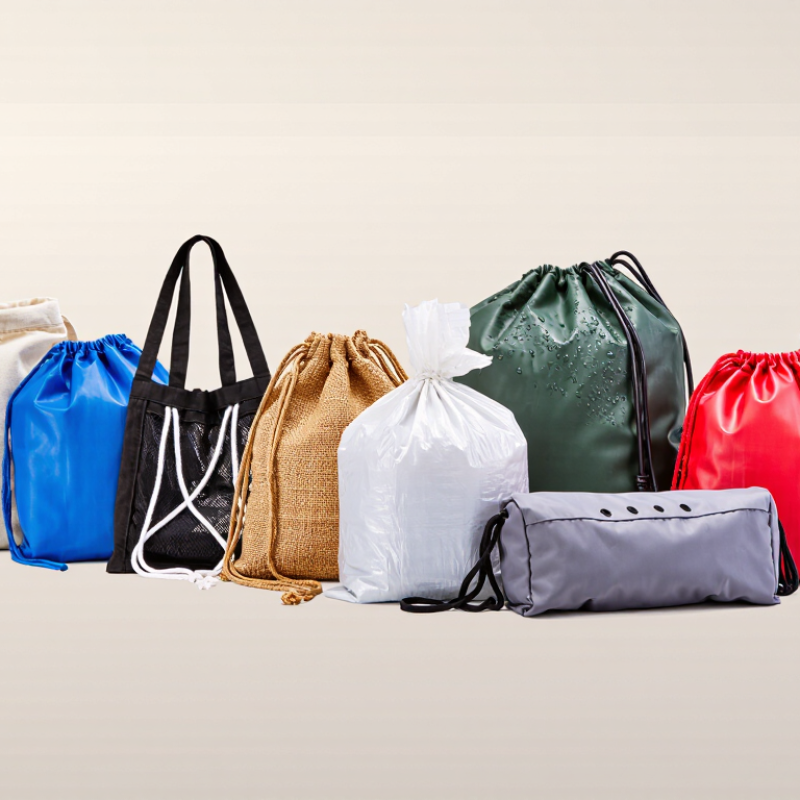
Top 10 Types of Drawstring Bags for Global Buyers
Drawstring bags are best classified by fabric, construction, and intended use. Common types include cotton, canvas, jute, nonwoven polypropylene, polyester, recycled polyester, nylon, mesh, water-resistant coated bags, and shoe or laundry bags. These categories overlap: a mesh bag may use polyester, while a shoe bag may be made from cotton. Fit matters. Buyers should check cord thickness, seam strength, fabric weight, and whether the opening stays secure when carried. A light promo pouch and a loaded gym bag need different reinforcement.
Material choice affects feel, durability, and sourcing claims. Textile Exchange’s Materials Market Report 2024 reports that global fiber production reached 124 million tonnes in 2023, with polyester accounting for 57%. That scale makes polyester a common option, but it does not make every polyester bag equally durable or environmentally preferable. Ask suppliers to specify fiber content and, where relevant, recycled content. OECD’s Global Plastics Outlook (2022) estimates that packaging generated 40% of global plastic waste in 2019; this broad figure is not specific to drawstring bags, but it makes material and end-of-life details worth checking.
Construction separates many practical types. Mesh suits visible contents and airflow, while coated nylon can resist splashes but may trap moisture inside. Canvas handles repeated use better than very light nonwoven fabric, though it adds weight and bulk. A drawstring closure is simple, not fail-proof. Inspect the channel stitching and cord ends on samples. This classification is useful, but not perfectly tidy: intended use and material often overlap.
Cinch sacks suit daily errands, school kits, and event giveaways because they fold flat and open quickly. A buyer should check the cord channel, stitching at the corners, and whether the fabric feels too thin when loaded.
Textile Exchange’s Materials Market Report 2024 estimates that global fiber production reached 124 million tonnes in 2023, with polyester accounting for 57%.
This is broad textile data, not a drawstring-bag market estimate, but it helps explain why polyester is common in lightweight bags. Recycled content can be useful, yet ask suppliers for documentation rather than relying on a label alone.
Gym bags need more structure. Wider cords, reinforced stress points, and a wipe-clean lining help when carrying a towel, bottle, and training clothes. A very small sack can feel awkward on the shoulders. Fit matters.
Shoe bags serve a different purpose: they separate dusty soles from clean clothing inside luggage or a larger gym bag. Mesh panels improve airflow, while coated fabric can contain dirt more easily; neither choice is perfect for every use. For bulk orders, request samples and test seams with realistic loads. Check cord length, print placement, and fabric odor before approving production.
Laundry drawstring bags work best when their fabric and closure match the load. A roomy polyester bag can hold towels or gym clothes, while a breathable cotton option may suit lighter garments. Check the cord channel and stitching near the corners; these areas take repeated strain. Fit matters. An oversized bag can become awkward to carry when wet laundry settles at the bottom.
Cooler drawstring bags usually combine insulated lining with a water-resistant outer layer. They are handy for a short picnic or carrying chilled drinks, but insulation varies widely. A thin lining may slow warming, not keep food cold for hours. Look for sealed seams and enough space for an ice pack without forcing the closure. Test the seams.
Mesh bags allow airflow, making them useful for beach items, sports gear, or damp footwear. Fine mesh can hold small items, while larger openings dry faster but may let sand or debris through. Waterproof drawstring bags protect contents from splashes and brief rain when the coating and seams are sound. They are not automatically suitable for submersion. One trade-off is easy to miss: coated fabric can feel stiff, and repeated folding may wear it. Buyers should compare material thickness, cord strength, and intended use before choosing quantities. A sample test often reveals more than a product description.
| Bag Type | Typical Materials | Typical Capacity | Common Construction | Best-Suited Uses | Buyer Considerations |
|---|---|---|---|---|---|
| Laundry Drawstring Bag | Polyester, cotton, or nylon | Approximately 20–40 L | Large opening, drawcord closure, reinforced bottom; some styles include a hanging loop | Travel laundry, dormitories, gyms, and household clothes sorting | Check fabric weight, seam strength, washability, and whether ventilation is needed. |
| Insulated Cooler Drawstring Bag | Polyester or nylon exterior with foam and PEVA or foil lining | Approximately 5–15 L | Insulated body, drawcord top, and often a webbing shoulder strap | Picnics, packed lunches, short outings, and carrying chilled drinks | Confirm lining construction, leak resistance, cleaning method, and intended load. |
| Mesh Beach Drawstring Bag | Polyester mesh, nylon mesh, or cotton mesh | Approximately 10–30 L | Breathable mesh panels or full-mesh body with a drawcord closure | Beach gear, swim equipment, sports balls, and items that need to air-dry | Review mesh opening size, edge finishing, cord comfort, and resistance to abrasion. |
| Waterproof Dry Drawstring Bag | Coated polyester, coated nylon, or PVC-coated fabric | Approximately 5–30 L | Water-resistant coated body; some designs use a roll-top closure rather than a simple drawcord | Boating, kayaking, camping, and protecting personal items from splashes | Do not assume every drawcord style is submersible; verify closure design and test requirements. |
| Gym Drawstring Bag | Polyester, nylon, or lightweight woven fabric | Approximately 10–20 L | Single-compartment sack with cord straps that may also function as shoulder straps | Workout clothing, shoes, towels, and lightweight sports equipment | Consider cord thickness, reinforced eyelets, pocket needs, and expected carrying weight. |
| Footwear Drawstring Bag | Polyester, nylon, cotton, or nonwoven polypropylene | Typically sized for one pair of shoes | Compact sack with a top drawcord; some styles use a wipe-clean inner surface | Travel packing, shoe storage, sports kits, and separating footwear from clothing | Check dimensions against the target shoe range and allow room for larger footwear. |
| Reusable Mesh Produce Bag | Polyester mesh, nylon mesh, or cotton mesh | Approximately 2–10 L | Lightweight open-weave pouch with a cord closure, often in several sizes | Groceries, produce organization, and lightweight household storage | Review mesh durability, closure security, care instructions, and applicable local requirements. |
| Cotton Drawstring Bag | Woven cotton or cotton canvas | Approximately 1–15 L | Simple sewn pouch with a cotton cord; available in lightweight and heavier fabric weights | Gift packaging, personal storage, travel accessories, and reusable everyday carrying | Specify fabric weight, finished dimensions, shrinkage expectations, and print area if needed. |
| Clear Waterproof Drawstring Pouch | TPU or PVC film with textile trim or cord | Approximately 1–5 L | Transparent pouch body with sealed or welded seams and a drawcord or other closure | Keeping small items visible and separated during travel or water-adjacent activities | Ask about film thickness, seam method, flexibility in cold conditions, and closure performance. |
| Heavy-Duty Utility Drawstring Sack | Heavyweight polyester, nylon, or coated woven fabric | Approximately 20–50 L | Reinforced seams and base, wider drawcord, and optional carry handles | Bulky gear, outdoor equipment, team supplies, and general-purpose storage | Match fabric strength and reinforcement to the load; confirm finished size and packed weight. |
| Typical capacities and construction details vary by design and supplier. Confirm final dimensions, materials, performance claims, and applicable market requirements before ordering. | |||||
Drawstring backpacks suit buyers who need lightweight carrying space without a bulky frame. They work well for campus events, sports kits, and day trips. Check the cord thickness, seam strength, and fabric weight before ordering. A loaded bag pulls hard at its upper corners. Thin stitching can fail there first. Mesh panels help damp gear breathe, but they offer less privacy and weather protection. There is no perfect material for every use.
Tips: Ask for a sample with the intended fabric and print. Load it with realistic items, then test the cords and seams. A flat sample alone can be misleading.
Promotional drawstring bags put a logo in view, but useful design matters more than a large print. Choose a calm color and readable artwork, and confirm how the image looks on the finished fabric. Small details can shift during production; allow time to review a proof.
Gift bags need a different touch. Soft cotton or a neat woven finish can make simple packaging feel considered. Add a cord stopper only when it suits the bag’s use. It may look polished, yet adds cost and can be unnecessary. Check bag dimensions against the actual gift, not its estimated size. A few centimeters can change the fit.
Global buyers comparing drawstring bags should start with use, not appearance. A lightweight cotton bag suits event handouts, while recycled polyester handles frequent travel and damp conditions better. Nonwoven polypropylene can lower unit cost for short campaigns, but seams may wear sooner under heavy loads. For gym kits, mesh improves airflow; for premium retail, canvas offers a firmer feel. Check fabric weight, cord thickness, and finished dimensions against the intended contents.
Features matter in real use. Details matter. A reinforced bottom helps carry shoes or books, while eyelets can reduce cord abrasion. Ask whether colorfastness, print placement, and stitching are checked on production samples. Compare suppliers using the same specification sheet: material composition, size tolerances, packaging, minimum order, sample timing, and shipping terms. Request recent inspection photos or a pre-shipment check when practical. A polished sample is useful, but it does not prove every batch will match.
Tips: Fill a sample with the actual load, pull the cords repeatedly, and inspect seams after washing if washing is expected. Record acceptable color and size variation in writing. Supplier replies can be fast; production details are sometimes less clear. Ask one more question.
Typical fabric-weight ranges in grams per square metre (gsm) help buyers compare bag types. Actual specifications vary by material grade, construction, and supplier.
These ranges are indicative material benchmarks, not a standardized specification or supplier survey. Confirm the fabric weight and finished-bag requirements with each supplier.


30 Beach Street, Mt Vernon, NY 10550
914-239-3878 sale@bbqmachine.com
© 2025 by TurboFil Packaging Machines, LLC