 Skip to content


Best Poultry Slaughtering Equipment Suppliers in China?
Choosing among the best poultry slaughtering equipment suppliers in China takes more than comparing prices. A reliable supplier should explain how each machine fits your processing capacity, product range, and available floor space. Ask about the full line, from live-bird handling and defeathering to chilling and packing. Details matter.
Look closely at construction materials, weld quality, access for cleaning, and the way equipment moves birds through each stage. Request clear specifications, layout drawings, and references for installations similar to yours. Ask for evidence. A factory visit or live demonstration can reveal practical details that a brochure may leave out, such as noise, maintenance access, and operator workflow. Confirm what training, spare parts, and after-sales support are available, and how quickly the supplier typically responds.
This guide introduces key points for assessing poultry slaughtering equipment suppliers in China. It considers product range, customization, manufacturing capability, communication, and service—not just headline prices. These factors can help buyers frame better questions and compare proposals on a consistent basis. Still, no checklist can replace a careful discussion of your own operating conditions. Some specifications may look impressive but offer little value for a particular plant. That is easy to overlook. Treat supplier claims as a starting point, then verify them with documents, demonstrations, and references where possible.
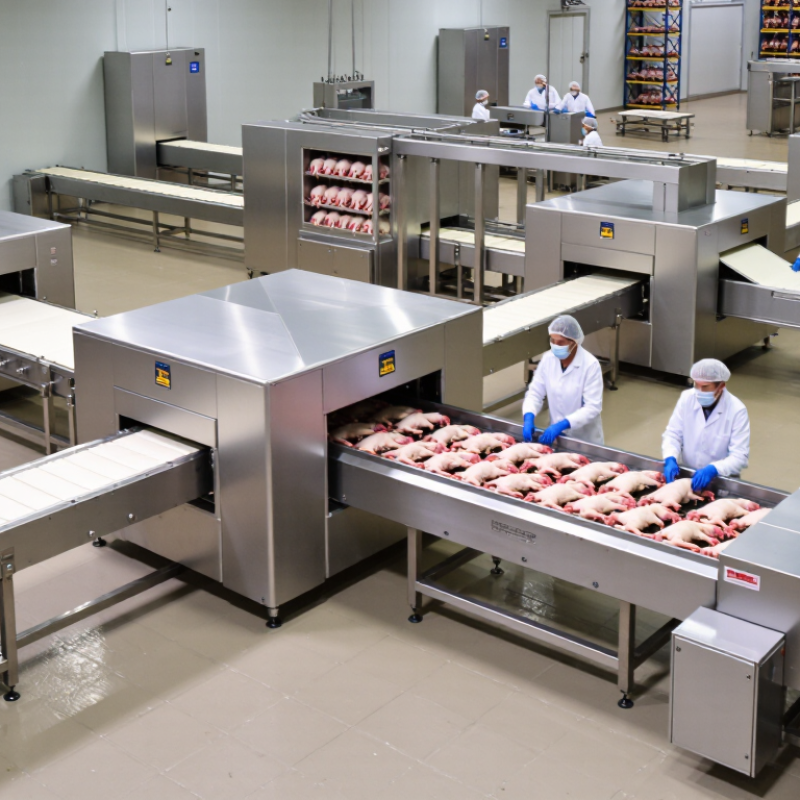
Poultry Slaughter Lines in China: Capacity Ranges from 2,000 to 12,000 Birds per Hour
Chinese poultry slaughter lines typically span 2,000–12,000 birds per hour. That range suits very different plants. A 2,000-bird line may fit a regional processor, while a 12,000-bird line needs closely synchronized shackling, defeathering, evisceration, chilling, and packing. Rated speed alone can mislead. Ask suppliers whether their figures assume a specific bird weight, uninterrupted operation, and matching downstream equipment. Request data on water and energy use, changeover time, spare parts, and actual line output.
The OECD-FAO Agricultural Outlook 2024–2033 projects poultry will account for about 43% of global meat consumption by 2033. This is a global forecast, not a promise of demand for any individual plant. Match equipment capacity to local orders, labor availability, cold storage, and bird size. Keep room for downtime. A line rated at 12,000 birds per hour may look efficient on paper, yet poor synchronization can leave carcasses waiting between stations. One point buyers sometimes overlook: how was the quoted speed measured? Ask for a documented acceptance test using representative birds and clearly stated measurement conditions.
| Evaluation Dimension | Typical Equipment or Process | Typical Line Capacity | Key Selection Considerations |
|---|---|---|---|
| Overall line throughput | Integrated poultry slaughter line with coordinated conveying and processing stations | 2,000–12,000 birds per hour | Confirm the rated speed for the complete line, not just an individual machine. Actual output depends on bird size, staffing, operating hours, and process configuration. |
| Live-bird receiving and hanging | Receiving area, shackles, overhead conveyor, and live-bird handling equipment | Matched to the selected line speed | Check bird-size range, loading layout, ergonomic access, and provisions for reducing handling stress. |
| Stunning and bleeding | Electrical water-bath stunning or a suitable controlled-atmosphere system, followed by a bleeding conveyor or trough | Matched to the selected line speed | Ask how settings are controlled and documented. Stunning and slaughter procedures must meet the destination market’s animal-welfare and regulatory requirements. |
| Scalding and defeathering | Scalding tank or tunnel, followed by mechanical picking machines | Matched to the selected line speed | Scalding conditions and picker adjustment depend on bird type and the desired skin or product characteristics. |
| Evisceration and inspection | Opening, evisceration, inspection, and related overhead conveyor equipment; manual or automated configurations may be used | Matched to the selected line speed | Confirm the required labor level, adjustment range for different bird sizes, inspection access, and hygiene-oriented design. |
| Carcass washing and chilling | Carcass washers and an appropriate chilling system, such as immersion chilling or air chilling | Sized for line output and residence time | Chiller capacity depends on product load, target temperature, residence time, and local food-safety rules; request a process-based sizing calculation. |
| Grading, portioning, and packing | Weighing or grading equipment, optional cut-up machinery, and packing stations | Selected to match downstream demand | Specify whether the plant will sell whole birds, parts, or both, and whether grading, weighing, and packing need to be integrated. |
| Plant layout and utilities | Equipment arrangement, water and drainage points, electrical supply, compressed air, and wastewater interfaces | Designed for the project’s target throughput | Request general-arrangement drawings and utility consumption estimates before confirming building dimensions or installation requirements. |
| Materials and cleanability | Food-contact surfaces and equipment designed for routine washing and sanitation | Applies across all line capacities | Verify material specifications, access for cleaning, drainage, and compatibility with the plant’s sanitation chemicals and procedures. |
| Installation and after-sales support | Commissioning, operator training, spare-parts support, and technical documentation | Confirm for the project scope | Compare the scope, response arrangements, documentation language, warranty terms, and availability of replacement parts. |
| Note: Capacity figures indicate the overall range specified in the title. Equipment configuration and achievable throughput vary by project; request a written line specification and confirm applicable food-safety, animal-welfare, and export-market requirements. | |||




30 Beach Street, Mt Vernon, NY 10550
914-239-3878 sale@bbqmachine.com
© 2025 by TurboFil Packaging Machines, LLC
© 2025 by TurboFil Packaging Machines, LLC