China Best Automated Label Applicator for Global Buyers

Global buyers comparing a China-made automated label applicator need more than a headline speed. They need to know whether the machine can handle their containers, label stock, and daily production rhythm. The International Federation of Robotics’ World Robotics 2024 report recorded 541,302 industrial robots installed worldwide in 2023. That figure covers industrial robots broadly, not label applicators specifically. Still, it shows the scale of investment in factory automation. In a packaging line, even a small labeling delay can leave filled bottles or cartons waiting at the conveyor.

A useful comparison starts with practical details: label placement tolerance, changeover time, sensor compatibility, and access to spare parts. Ask suppliers to demonstrate performance using your actual container and label materials. Watch the label meet a curved bottle, pass a sensor, and settle without wrinkles. Small details matter. Grand claims are easy to print; repeatable results are harder. Buyers should also review service coverage, operator training, and clear documentation before comparing quotations. A lower purchase price may not mean lower operating costs. One limitation is worth admitting: public industry reports rarely isolate automated label applicator sales from wider packaging equipment markets. Treat broad automation figures as context, not proof that one machine suits every factory. The best choice is the one that performs reliably in your conditions, with support you can reach when production stops.
China Best Automated Label Applicator for Global Buyers

What an Automated Label Applicator Is and How It Works

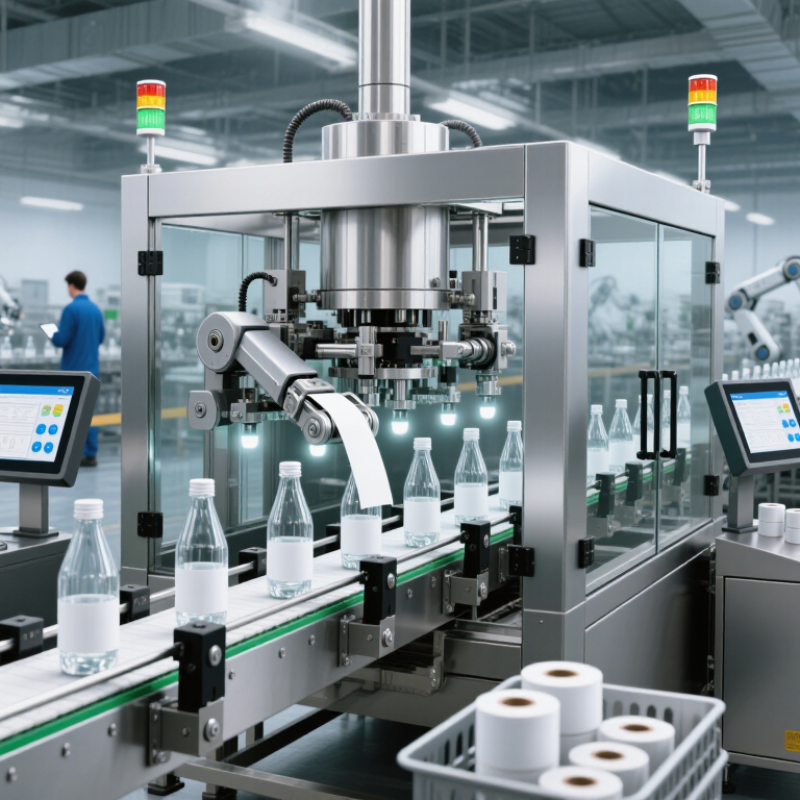
An automated label applicator feeds a label from a roll, separates it from its backing liner, and places it on a moving product. A sensor detects each container; a controller triggers the feed at the set position. Rollers, a tamp pad, or an air jet then press the label onto the surface. That sounds simple. In practice, label tension, product spacing, and conveyor speed must work together.

The AWA Global Labeling and Product Decoration Market Study and Sourcebook reported worldwide label demand of about 72.8 billion square meters in 2022. That scale helps explain why repeatable application matters across packaging lines, though it does not guarantee a specific machine’s performance. Operators typically set label pitch, application delay, and feed speed, then test with actual containers. A curved bottle may need a different placement method from a flat carton. Small gaps matter.

For buyers, check whether the applicator can synchronize with the line encoder and handle the label roll’s width and core size. Ask for measured placement accuracy at your intended production speed, not only the machine’s maximum rate. Dust, condensation, or a slightly uneven package can shift results. And settings may need adjustment after a changeover; automation is not “set and forget.”

Main Types and Industrial Applications of Label Applicators

Automated label applicators place labels consistently as products move along a production line. Common types include pressure-sensitive applicators, wrap-around systems, top-and-bottom units, and print-and-apply machines. Pressure-sensitive models use pre-formed labels on a release liner, making them suitable for cartons, jars, and bottles. Wrap-around applicators cover cylindrical containers, while top-and-bottom units label flat packs or trays. Print-and-apply systems generate variable information, such as batch codes, for individual cases or pallets.

Different industries need different label placement and handling. Food and beverage lines often apply labels to wet or chilled bottles, so label adhesion and container spacing matter. In cosmetics, compact applicators can label small jars without covering product details. Warehouses and shipping operations commonly use print-and-apply systems on moving cartons. They can print a barcode and place it on a defined panel. Small alignment errors become obvious quickly.

No line is perfectly uniform. Container shape, surface texture, line speed, and label material can all affect placement. A machine that works well with rigid bottles may struggle with flexible pouches. Operators should test actual products at production speed, not just inspect a sample on a workbench. That test can reveal wrinkles, skewed labels, or difficult roll changes. Specifications help, but real packaging can still surprise you.

China Best Automated Label Applicator for Global Buyers - Main Types and Industrial Applications of Label Applicators

Applicator Type How It Applies Labels Typical Products and Surfaces Common Industrial Applications Key Advantages Selection Considerations
Wipe-On Applicator A label is dispensed onto a moving product and pressed onto its surface by a roller, brush, or wiping plate. Flat or gently curved sides of cartons, cases, bottles, and other products moving along a conveyor. Food and beverage packaging, consumer goods, personal care products, and case labeling. Continuous contact supports reliable placement on products moving at a steady speed. Works best when product position and conveyor speed are consistent; surface shape and label stiffness affect placement.
Tamp Applicator A pneumatic or electric tamp pad picks up a label and presses it onto a stationary or indexed product. Flat panels, cartons, trays, and packages with a defined label area. Packaging lines, electronics, pharmaceutical packaging, and warehouse operations. Provides controlled placement where a direct wipe-on approach is unsuitable. Requires suitable clearance for the tamp head and accurate product positioning at the application point.
Tamp-Blow Applicator A label is held on a tamp pad and transferred to the product with a short burst of air, reducing or avoiding direct contact. Irregular, delicate, recessed, or difficult-to-reach surfaces. Electronics, medical packaging, formed containers, and products with sensitive finishes. Can apply labels where pressing directly onto the surface is impractical. Air pressure, transfer distance, label size, and label stiffness need to be matched to the product and line setup.
Wrap-Around Applicator A label is applied to a cylindrical container and wrapped around its circumference using rollers or a belt. Round bottles, jars, cans, and other cylindrical containers. Beverage, food, chemical, and personal care packaging. Can apply full-wrap or partial-wrap labels while the container moves through the machine. Container diameter, stability, label overlap, and rotation control influence alignment and finish.
Front-and-Back Applicator Two application stations place labels on opposite sides of a product, either simultaneously or in sequence. Flat-sided or oval bottles, containers, and packages with accessible front and rear panels. Household products, food containers, cosmetics, and chemical packaging. Labels both sides of a product within one production line. Product orientation and spacing must remain controlled to keep both labels correctly positioned.
Top-and-Bottom Applicator Application heads place labels on the upper and lower surfaces of products on a conveyor. Boxes, trays, clamshells, flat packs, and products with accessible top and bottom surfaces. Food packaging, logistics, retail packaging, and product identification. Supports two-sided labeling without requiring separate labeling lines. Bottom-side application may require a conveyor gap or specialized product handling; package stability is important.
Print-and-Apply Applicator Prints variable information on a label and applies it directly to a product, carton, or pallet load. Cases, shipping cartons, pallets, and products requiring changing identification data. Warehousing, distribution, manufacturing, and supply-chain traceability. Can produce variable data such as barcodes, batch details, and shipping information at the point of application. Print quality, data connectivity, label format, and verification requirements should be considered.

Key Features That Define a High-Quality Applicator

A high-quality automated label applicator places labels consistently, even when packaging changes shape or moves at different speeds. Look for adjustable guides that keep bottles or cartons steady as they enter the labeling station. A sensor should detect each product reliably, while a controllable feed mechanism helps prevent wrinkles, skewed labels, and wasted backing paper. Small details matter.

Ease of adjustment is just as important as speed. Operators should be able to change label position, roll tension, and conveyor settings without a lengthy setup. Clear controls and accessible rollers make routine cleaning and inspection simpler. During a product changeover, a few minutes saved can protect an entire production shift. Still, a fast machine is not automatically the right machine; its working range must match the label sizes and container shapes used on site.

Check how the applicator handles real production conditions, not only a demonstration. Test different container surfaces and label materials, and watch for missed labels or edge lifting. Ask about spare parts, maintenance intervals, and integration with existing sensors or conveyors. No machine is perfect. Even a well-built system may need fine adjustment when humidity, adhesive, or packaging varies. A practical supplier should explain those limits clearly.

How Global Buyers Can Evaluate Chinese Manufacturers

When evaluating Chinese manufacturers of automated label applicators, look beyond quoted speed and price. Ask for a live test using your containers, label stock, and target line rate. Watch labels pass through curves and seams. Check placement consistency across several runs, not just one polished demonstration. Small details matter.

Review the machine’s adjustment range, sensor type, control interface, and changeover steps. Ask how operators load a new roll and correct a skewed label. Request written specifications for supported container sizes and label dimensions. A clear record of test results is more useful than a broad claim of high precision. It is fair to ask for a video, but an on-site or independently witnessed test can reveal more.

Assess the manufacturer’s engineering and service process, too. Ask who handles installation, what training is included, and how quickly common wear parts can be supplied. Check whether manuals, wiring diagrams, and maintenance schedules are complete and understandable. Speak with comparable users when possible, while recognizing that every production line differs. One point deserves reflection: a low-cost machine may still be expensive if setup takes weeks. Compare the full operating picture, and record any unanswered questions before placing an order.

China Best Automated Label Applicator for Global Buyers

How Global Buyers Can Evaluate Chinese Manufacturers

Suggested 100-point buyer evaluation framework. These weights are a practical scoring model, not measured industry statistics or ratings of specific manufacturers. Verify performance using your own labels, products, line speed, and acceptance tests.

Installation, Integration, and Ongoing Maintenance Considerations

Before choosing an automated label applicator from China, provide the supplier with actual containers and label rolls. Drawings alone may miss curved surfaces, slippery coatings, or small changes in container size. Small details matter. Measure conveyor height, line speed, roll direction, and available service space before installation. Then test filled containers at normal production speed, checking for skewed labels, wrinkles, and missed detection.

Integration should be planned with the existing line in mind. Confirm electrical supply, communication signals, sensor positions, and stop-start logic with your engineering team. A short trial can look perfect while concealing problems during a shift change or product changeover. Test several container formats and record the settings that work. If operators need to adjust guides or tension, make those steps clear and repeatable.

Maintenance is not just cleaning the applicator. Set a routine for checking rollers, belts, sensors, and label-path buildup, using the machine manual as the reference. Keep common wear parts on site and train more than one operator to replace them safely. Dust and adhesive residue can cause gradual faults. We learned that a quick visual check is easy to skip when production is busy, so a simple signed checklist can help. Leave room in the schedule for recalibration after format changes; it may take longer than expected.