 Skip to content


Top Filling Machine Suppliers for Global Buyers?
Choosing among top filling machine suppliers is not a simple price comparison. A line may handle clear water today and a foaming, viscous product tomorrow. The wrong filler can mean slow changeovers, inconsistent fills, and costly downtime. Small details matter: nozzle design, container handling, cleaning access, and local service response.
The global market is growing, but estimates vary by research firm and machine scope. Grand View Research’s filling-machine market analysis tracks demand across sectors including food, beverages, pharmaceuticals, and chemicals. PMMI’s 2024 State of the Industry report also highlights automation, labor constraints, and operational efficiency as important packaging-industry concerns. These trends make supplier capability—not just machine speed—a practical buying criterion. Ask for product-specific trials, documented accuracy data, spare-parts availability, and references from comparable installations. A polished brochure is not a factory acceptance test.
Manufacturing pioneer Taiichi Ohno wrote, “Without standards, there can be no improvement.” That principle applies to filling lines: buyers need clear acceptance criteria before comparing proposals. No supplier is perfect. And a low quote can hide expensive integration work. This guide examines suppliers through equipment range, application experience, support, and verifiable performance. It also leaves room for doubt: published market figures differ, and a machine that excels in one plant may not suit another. The best choice is the one that can demonstrate a reliable fit for your product, containers, operators, and production targets.
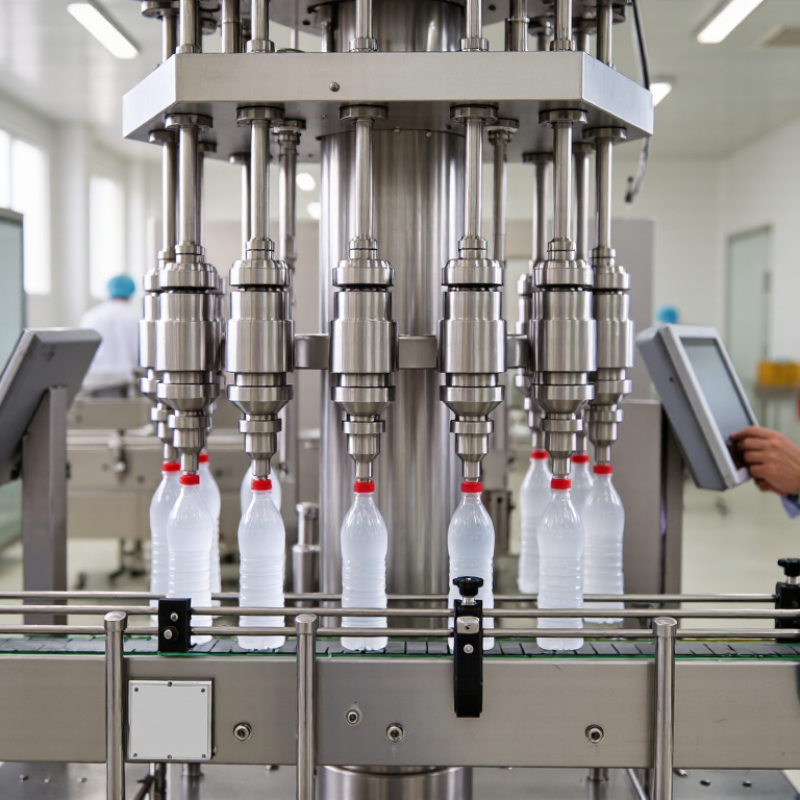
Understanding Filling Machines and Their Industrial Applications
Filling machines transfer measured quantities of liquid, paste, powder, or granules into containers. Their design depends on product viscosity, container shape, filling speed, and cleaning needs. A thin beverage flows differently from a thick sauce. Powder can scatter. Small details matter.
Common systems include gravity, piston, pump, and auger fillers. Food and beverage plants use them for bottles, jars, and pouches; pharmaceutical and personal-care facilities fill liquids, creams, and gels. Operators check fill levels, seals, and changeover time on the line. A machine that runs quickly but handles format changes poorly may slow production overall. That trade-off is easy to underestimate.
Market figures offer useful context, not a purchasing shortcut. Grand View Research’s 2023 packaging machinery analysis estimated the global market at about US$45.9 billion, with growth projected through 2030. The report covers several machine types, including filling equipment, so the figure is not a filling-machine total. FAO’s Food Loss Index also tracks losses across supply chains; it does not show that filling machines alone prevent them. Buyers should test their actual product and containers, then assess accuracy, cleaning access, and downtime. Real trials matter. A specification sheet cannot reveal every awkward changeover.
Top Filling Machine Suppliers for Global Buyers? - Understanding Filling Machines and Their Industrial Applications
| Machine Type | Filling Principle | Common Products | Typical Applications | Key Selection Considerations |
|---|---|---|---|---|
| Piston filler | A piston draws a measured volume into a cylinder and dispenses it into the container. | Sauces, creams, pastes, gels, and other viscous products | Food processing, personal care, cosmetics, and household products | Product viscosity, particle size, target fill volume, and cleaning requirements |
| Gravity filler | Product flows into containers under gravity, often with timed or level-based control. | Free-flowing, low-viscosity liquids such as water and some beverages | Beverage, food, and selected chemical packaging lines | Liquid foaming behavior, container opening, fill-level needs, and line speed |
| Overflow filler | A recirculating nozzle fills each container to a consistent visible level. | Thin liquids, including clear beverages, cleaners, and personal-care liquids | Packaging where uniform fill appearance matters across transparent containers | Container shape consistency, foaming tendency, product recovery, and changeover needs |
| Net-weight filler | A weighing system controls the amount of product delivered by weight. | Liquids, powders, granules, and products sold by weight | Food, agriculture, chemicals, and bulk or large-container packaging | Required weighing accuracy, product flow characteristics, container range, and calibration practices |
| Aseptic filler | Product and packaging are handled under controlled sterile conditions to limit contamination. | Certain shelf-stable beverages, dairy products, and liquid foods | Food and beverage production requiring validated aseptic processing | Process validation, sterilization method, hygienic design, packaging compatibility, and regulatory requirements |
| Powder auger filler | A rotating auger meters powder into a container or package. | Flour, spices, protein powders, powdered ingredients, and some chemical powders | Food, nutrition, pharmaceutical, and chemical packaging | Powder density, flowability, dust control, target dose, and product-contact material requirements |
Machine suitability and achievable output depend on the product, container, filling volume, line configuration, and required hygiene or compliance standards. Confirm specifications with prospective suppliers before selection.
Related Posts
-
How to Choose the Best Oil Filling Machine for Your Business Needs
-
Top China Best Cosmetic Filling Machine for Global Buyers?
-
How to Choose the Best China Bottle Filling Machine?
-
Best Filling Machine for Efficient Production in 2026?
-
Why Choose an Automatic Liquid Filling Machine for Your Business?
-
2026 Best Automatic Liquid Filling Machine Reviews and Guide?



30 Beach Street, Mt Vernon, NY 10550
914-239-3878 sale@bbqmachine.com
© 2025 by TurboFil Packaging Machines, LLC
© 2025 by TurboFil Packaging Machines, LLC